How to say what you feel — and actually be heard
A breakup drops you into more hard conversations than almost any other stretch of life. You might have to split the furniture with someone you can barely look at, co-parent with an ex, tell a well-meaning friend you need space, hold a boundary you've never held before, or — when you're ready — let someone new see how you actually feel. And underneath all of those is the hardest conversation of all: the quiet one with yourself, about what you're really feeling and what you actually need.
There's a simple, four-step way to say difficult things so they land as honesty instead of an attack — and to hear other people the same way. The idea is warm and deeply human: get clear on what you feel and what you need, then say it plainly, without blame.1 That's the whole thing. Here's how each step works, and how to use it on yourself first.
Step 1 — Start with what actually happened
Begin with the plain facts — the version a camera would have caught, with no interpretation attached. "You never think about me" is a verdict. "The last three times I texted, I didn't hear back until the next day" is an observation. The difference matters more than it seems: a verdict puts the other person on trial, and people who feel accused stop listening and start defending. A neutral observation gives them nothing to argue with, so they can actually stay in the room.
Swap the verdict ("you always," "you never," "you're so…") for the specific thing that happened. Facts open the door; judgments slam it.
Step 2 — Name what you feel
Say the emotion out loud — to yourself or to them. This isn't soft or indulgent; it's one of the most reliable ways to calm your own nervous system. Simply putting a feeling into words measurably quiets the brain's threat response.2 Naming it really does help tame it.
One catch worth knowing: a lot of "feelings" are actually judgments in disguise. "I feel abandoned," "rejected," "ignored," "manipulated" — each one smuggles an accusation about what the other person did right back in, and the defensiveness returns with it. Real feelings are simpler and live in you: sad, scared, lonely, hurt, anxious, exhausted, ashamed, relieved, hopeful. "I feel rejected" points a finger; "I feel lonely and a little unwanted" opens a door. If the exact word won't come, the feeling wheel below is a simple map for finding it. Finding the true feeling underneath the accusation is where getting back in touch with yourself actually begins.
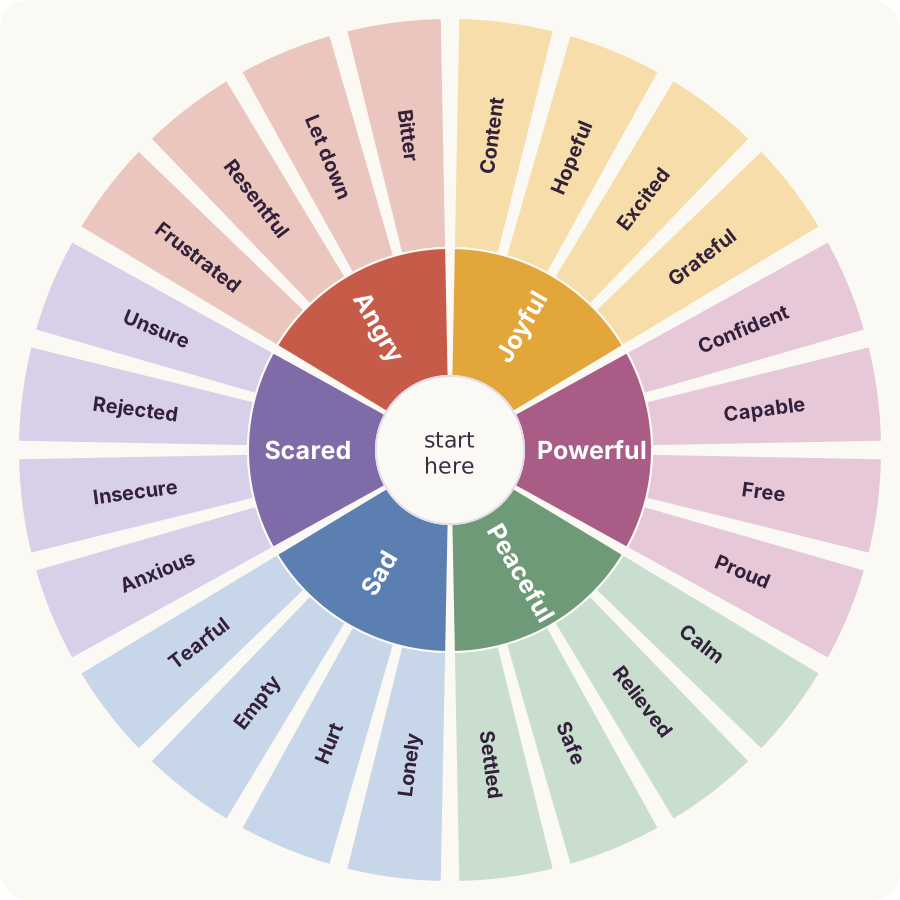
Step 3 — Find the need underneath
Every feeling is pointing at a need — one that's either being met or going unmet. Frustration, hurt, and loneliness aren't problems to argue away; they're messengers telling you something you need isn't there. Underneath almost every hard feeling sits a universal, human need: connection, respect, security, rest, honesty, reassurance, autonomy, to matter to someone.
So you link the feeling to the need: "I felt hurt because I need to feel considered," or "I'm anxious because I need a little more certainty right now." This is the step that quietly transforms a complaint into understanding — of yourself, and of them. It also takes the other person off the hook as the villain: you're not saying they're bad, you're saying a need of yours is going unmet.
Step 4 — Make a clear, kind request
End with something specific and doable — a real request, not a vague wish or a veiled demand. "Be more considerate" gives someone nothing to actually do. "Would you be willing to text me if you're running late?" gives them a clear yes-or-no. A good request is concrete, present-tense, and phrased as a genuine ask — which means it leaves room for a no. That's exactly what separates a request from a demand: if the only acceptable answer is yes, it was never really a request.
Putting it together: from blame to being heard
Watch what happens to the same moment run through all four steps.
Before: "You're so selfish — you always disappear and make me feel like I don't matter."
After: "When I didn't hear back for two days (what happened), I felt anxious and kind of small (feeling), because I really need to know I matter to the people I'm close to (need). Would you be willing to send a quick text next time, even just 'swamped, talk soon'? (request)"
Same truth, same hurt — but the second version is almost impossible to fight with, because there's no attack to defend against. You've told them how you feel and given them a way to help.
Use it on yourself first
Here's the part most people skip, and it's the most valuable one after a breakup: run the four steps inward before you take them to anyone else. What actually happened? What am I feeling — the real feeling, not the accusation? What do I need? What would I like to ask for? You can do it in your head on a walk, or write it out in four short lines.
This is the "getting in touch with your emotions" work, made concrete. Often you'll discover the feeling you called anger was really fear, or that what you labeled they abandoned me was I'm scared I'm not worth staying for. And just as often, once you understand yourself clearly, you find you didn't need the confrontation at all — you needed to be understood, and you can start by understanding yourself.
Listen for the same four things
The framework flips around and becomes a way to connect, not just to be heard. When someone's upset with you, listen underneath their words for the same four things: what they observed, what they feel, what they need, what they're asking for. Then reflect the feeling and the need back, as a gentle guess: "Sounds like you were frustrated because you needed a bit more warning?"
People feel profoundly understood when someone names their feeling and the need beneath it — and simply listening this way makes the other person feel more heard and understood than almost anything else you can do.3 Empathy isn't a personality trait you either have or don't; it's this, practiced. It's a skill, and it's learnable.
None of this makes hard conversations easy — it makes them possible. You're not learning a script; you're learning to notice what you feel, trace it to what you need, and ask for it like someone who believes their needs are allowed to exist. After a breakup, that last part might be the most important thing you rebuild.
References
- Rosenberg, M. B. (2015). Nonviolent Communication: A Language of Life (3rd ed.). PuddleDancer Press. (The four-step framework — observation, feeling, need, request — is adapted from this work.)
- Lieberman, M. D., Eisenberger, N. I., Crockett, M. J., Tom, S. M., Pfeifer, J. H., & Way, B. M. (2007). Putting feelings into words: Affect labeling disrupts amygdala activity in response to affective stimuli. Psychological Science, 18(5), 421–428.
- Weger, H., Castle Bell, G., Minei, E. M., & Robinson, M. C. (2014). The relative effectiveness of active listening in initial interactions. International Journal of Listening, 28(1), 13–31.
- Gottman, J. M., & Silver, N. (1999). The Seven Principles for Making Marriage Work. Crown. (On the "soft startup" and how the opening of a conversation shapes its outcome.)
This article summarizes communication research and frameworks for general education; it is not therapy or a substitute for professional support. Verify citations against the primary sources before relying on them.